




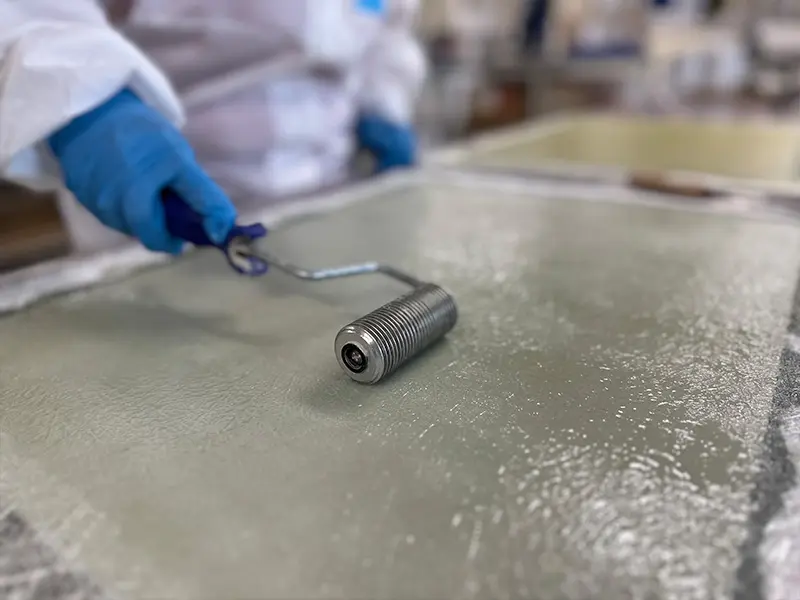
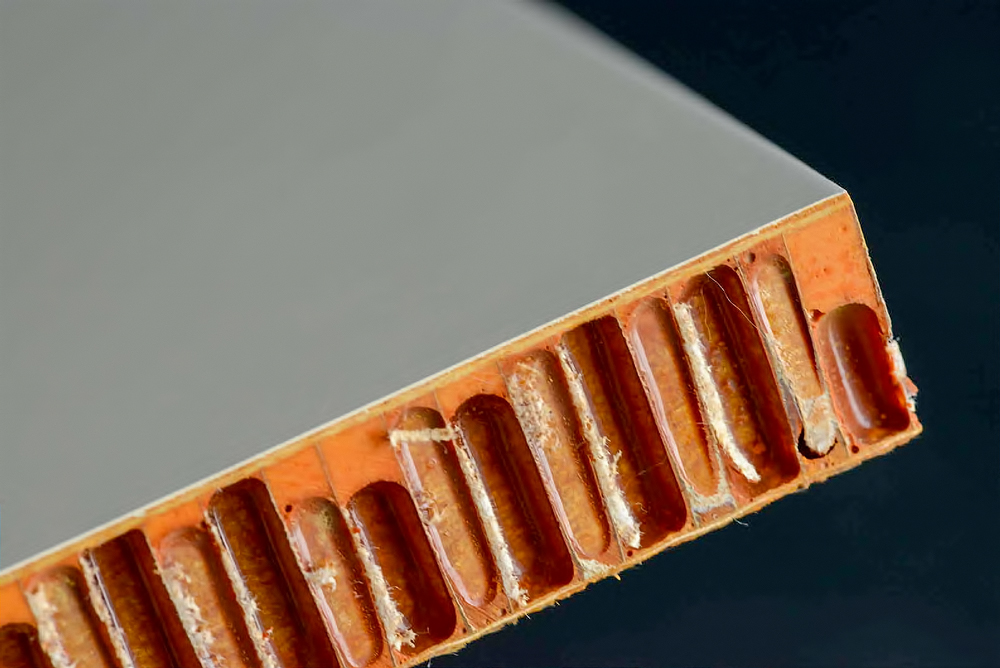
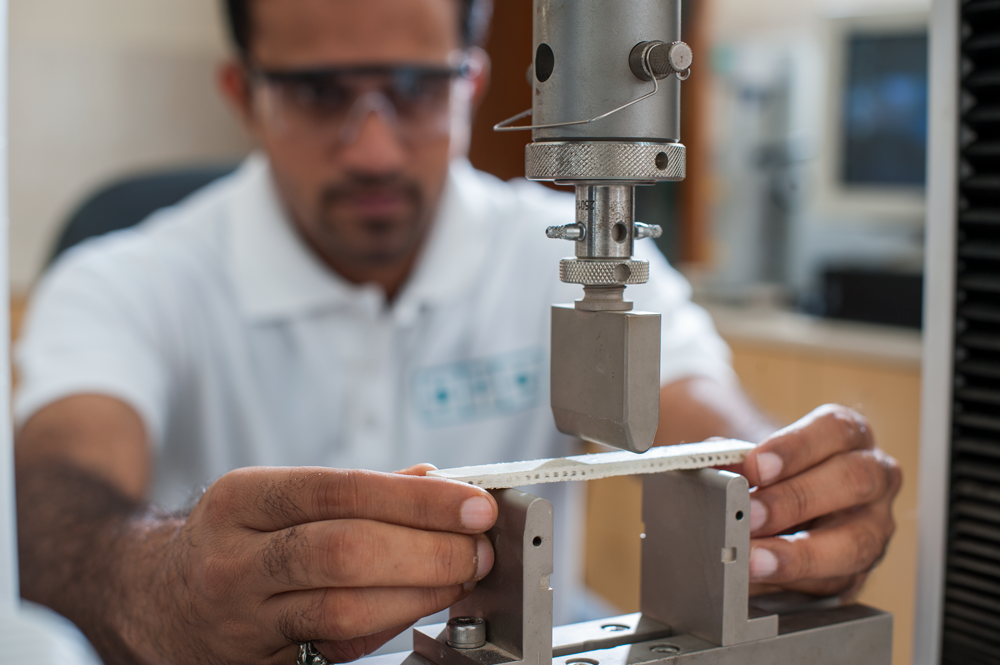




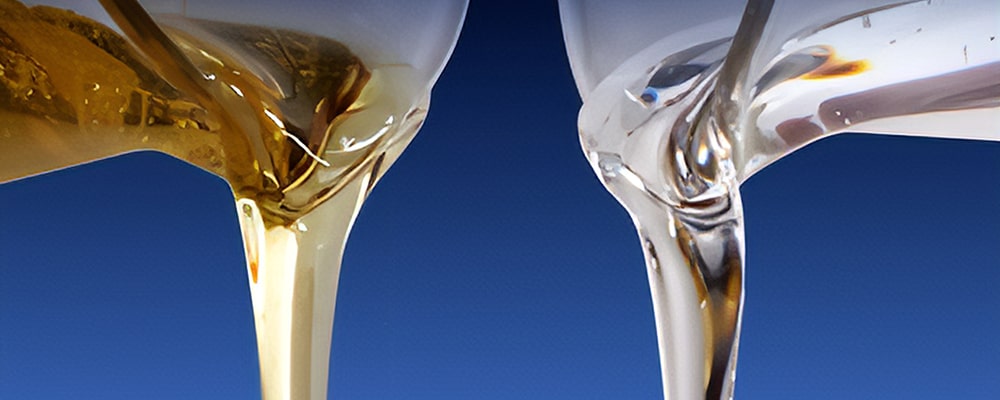
Epoxies are used primarily for fabricating high-performance composites with superior mechanical properties, resistance to corrosive liquids and environments, superior electrical properties, good performance at elevated temperatures, good adhesion to a substrate, or a combination of these benefits. Surfaces of epoxy resin composites are not cosmetically appealing, so the material is a good choice in applications where functional requirements outweigh aesthetic ones.
The composite's strength can be increased or decreased by altering the proportion of reinforcement. Fillers may also be added to extend the value of the resin, reducing the cost of the final composite by as much as 50 percent.
The structure of the resin can be engineered to yield a number of different construction products with varying levels of performance. A major benefit of epoxy resins over polyester resins is their reduced shrinkage upon curing. Epoxy resins can also be formulated with different materials or blended with other epoxy resins to achieve specific performance features.
Advantages
Limitations
Processing Technologies
| Technical Details | |
|---|---|
| Maximum use temperature | 93 - 177 °C |
| Flexural strength | 4 - 44 ksi |
| Flexural modulus | 2.0 - 2.4 Msi |
| Tensile strength | 5 - 15 ksi |
| Tensile modulus | 0.6 - 0.7 Msi |
| Density | 1.2 - 1.25 grams/cc |
| Moisture absorption | 0.1 - 0.6 % |
| Coefficient of thermal expansion (x10-5) | 6 - 7 |