






Find your industry ›
Composites Processing Technologies
BFG employs a wide range of composite manufacturing processes, selecting the optimal technique for each application based on part geometry, production volume, material requirements, and performance targets.
Understanding the Fundamentals
Moulding Approaches
Composite manufacturing processes fall into two broad categories based on whether the mould is open or enclosed during layup and curing.
Open Mould
Open Moulding Processes
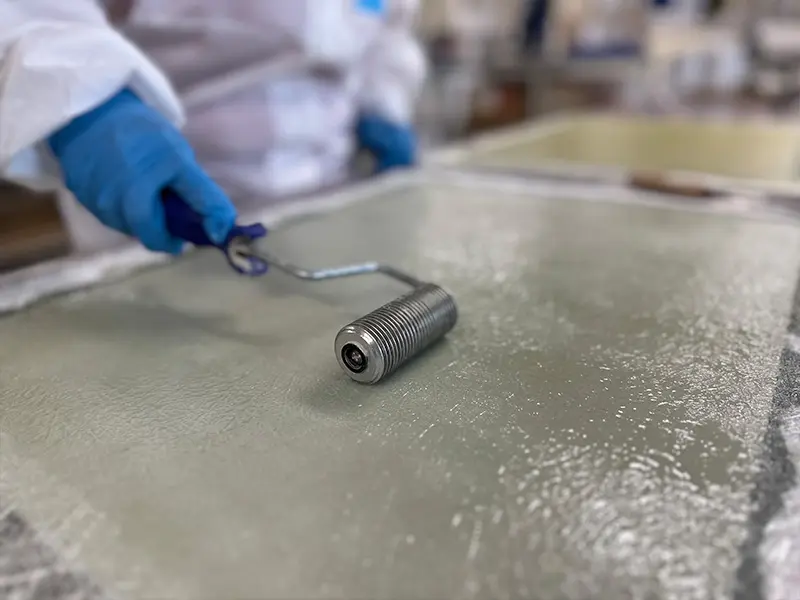
Open mould processes use a single-sided mould. Fibre reinforcements are placed on the mould surface and resin is applied manually or by spray, then cured at ambient or elevated temperature.
Closed Mould
Closed Moulding Processes
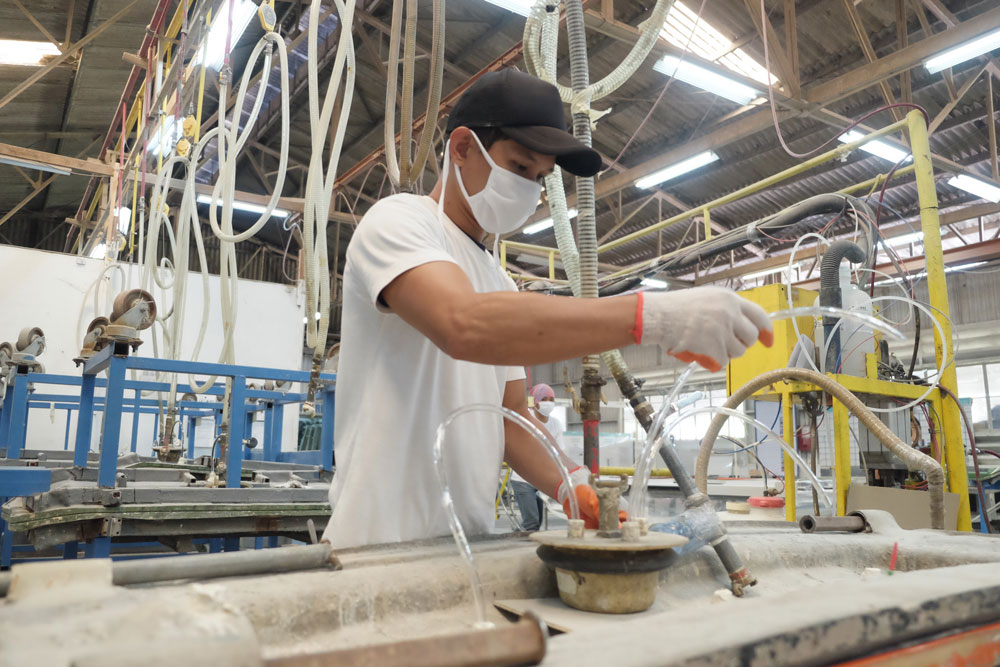
Closed mould processes use matched moulds or vacuum pressure to consolidate fibre and resin, producing parts with controlled thickness, superior surface finish on both sides, and reduced emissions.
LRTM
Light Resin Transfer Moulding -- vacuum-assisted resin injection into a lightweight closed mould for consistent, high-quality parts.
Learn more
RTM
Resin Transfer Moulding -- pressurised resin injection into rigid matched moulds for precision structural components.
Learn more
Press Moulding
Heated matched metal moulds under hydraulic pressure for high-volume, dimensionally precise composite parts.
Learn more
Hot Press Moulding (SMC)
Sheet Moulding Compound -- pre-impregnated sheets compression-moulded at high temperature for Class A surface finish.
Learn more
Vacuum-Assisted
Vacuum Processes
Vacuum-based processes use atmospheric pressure to consolidate laminates, remove trapped air, and achieve higher fibre content with improved mechanical properties.
Vacuum Bagging
A flexible membrane sealed over a wet layup uses vacuum to compact the laminate and remove air for improved fibre-to-resin ratio.
Learn more
Vacuum Forming
Thermoplastic sheets heated and drawn over a mould by vacuum for lightweight interior panels and enclosures.
Learn more
Vacuum Infusion
Dry fibre layup under vacuum bag with resin drawn through by differential pressure -- ideal for large, high-performance structures.
Learn more