









A
-
AdditiveA material added to a resin to modify its characteristics. Examples include pigments, UV inhibitors, fire retardants and fillers.
B
-
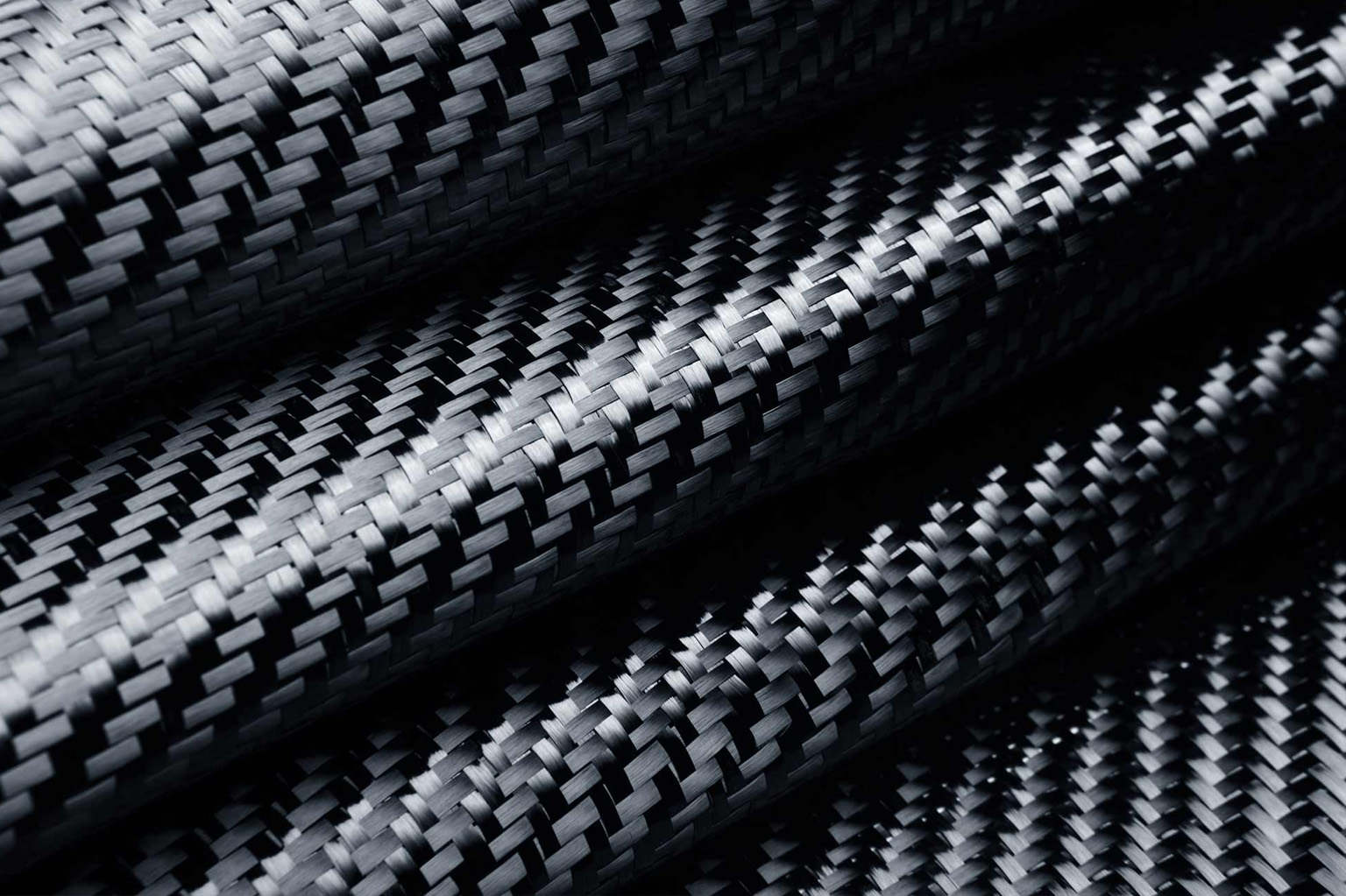
Bi-directionalA reinforcement arrangement where fibres are oriented at right angles to each other, providing strength in two perpendicular directions.
C
-
CatalystA substance that initiates or accelerates the curing reaction of a resin system without being permanently changed by the reaction itself.
-
CFRP ManufacturingCarbon Fibre Reinforced Polymer manufacturing. The process of producing composite parts using carbon fibre as the primary reinforcement material.
-
Chopped Strand MatA mat of randomly oriented short glass fibres held together by a binder. Used as a reinforcement layer to provide multi-directional strength.
-
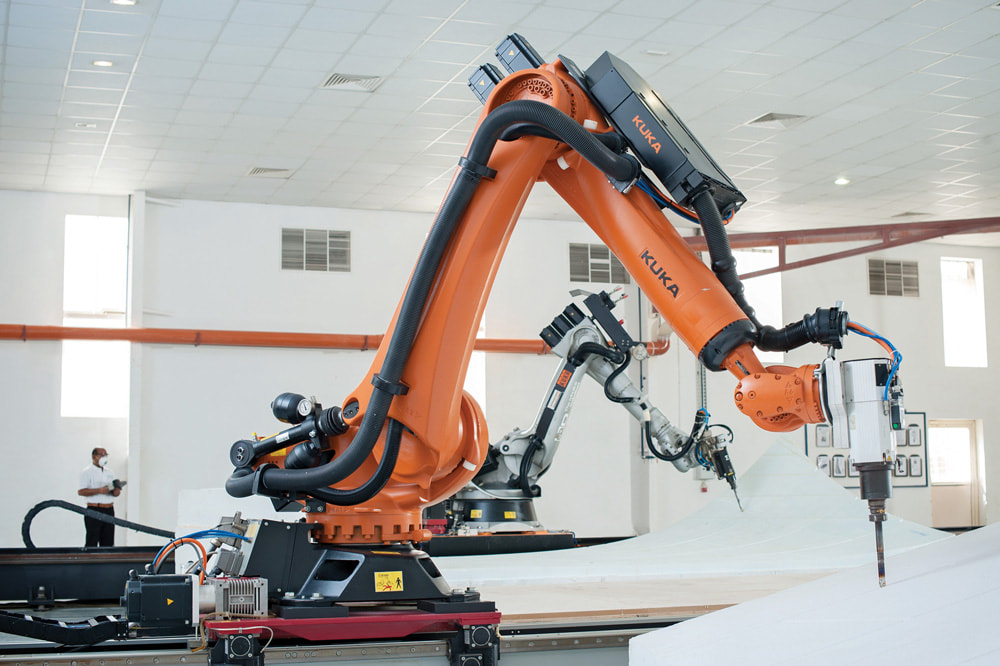
CNCComputer Numerical Control. An automated machining process used for precision cutting, trimming and finishing of composite components.
-
CompositeA material made from two or more constituent materials with significantly different physical or chemical properties that, when combined, produce a material with characteristics different from the individual components.
-
Compressive StrengthThe maximum compressive stress a material can withstand before failure. Measured as force per unit area under compression loading.
-
CoreA lightweight material placed between face sheets in a sandwich structure to increase stiffness and flexural strength while adding minimal weight.
-
CureThe process of chemical cross-linking of a resin system, transforming it from a liquid or semi-liquid state to a solid, rigid material.
D
-
DensityThe mass per unit volume of a material, typically expressed in kg/m³ or g/cm³.
-
Dielectric StrengthThe maximum electric field that a material can withstand without electrical breakdown. FRP composites are excellent electrical insulators with high dielectric strength.
E
-
Epoxy ResinA thermosetting resin system known for excellent adhesion, mechanical properties and chemical resistance. Widely used in high-performance composite applications.
F
-
FabricationThe process of manufacturing composite parts, including lay-up, moulding, curing and finishing operations.
-
FibreglassGlass fibres with diameters typically ranging from 9-32 microns, used as the most common reinforcement material in composite manufacturing.
-
Fibre ReinforcementThe fibrous material embedded within the resin matrix to provide structural strength and stiffness to a composite. Common types include glass, carbon and aramid fibres.
-
FillersParticulate materials added to a resin to modify properties such as shrinkage, cost, weight or surface finish. Examples include calcium carbonate, alumina trihydrate and microspheres.
-
FinishA surface treatment or coating applied to fibres to improve their compatibility with the resin matrix and enhance handling characteristics.
-
Fire RetardantsAdditives incorporated into resin systems to reduce flammability and improve fire performance of composite products.
-
Fire Retardant ResinA resin system formulated with fire retardant additives or inherently fire-resistant chemistry to meet specific fire performance requirements.
-
FlammabilityThe measure of a material's ability to support combustion. Composite fire performance is tested to standards such as ASTM E84 and BS 476.
-
FoamA lightweight cellular material used as a core in sandwich structures. Common types include PVC, PET, polyurethane and phenolic foams.
-
FRPFibre Reinforced Polymer. Also known as GRP (Glass Reinforced Plastic), GFRP (Glass Fibre Reinforced Polymer) or RP (Reinforced Plastic). A composite material made of a polymer matrix reinforced with fibres.
G
-
GelcoatA pigmented resin coating applied to the mould surface before lay-up to provide a smooth, durable and weather-resistant exterior finish on the finished composite part.
H
-
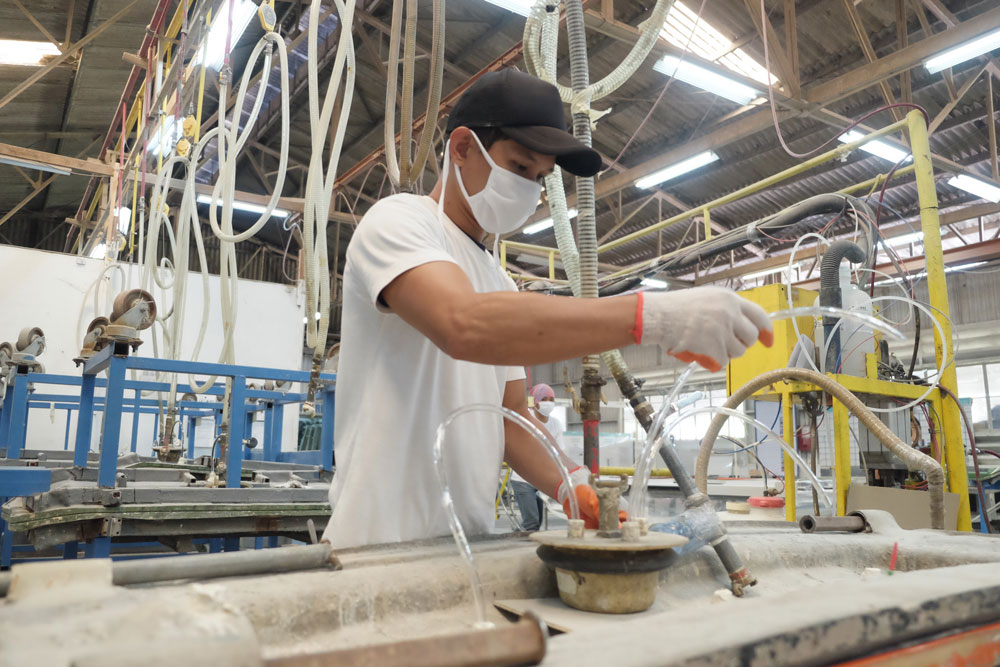
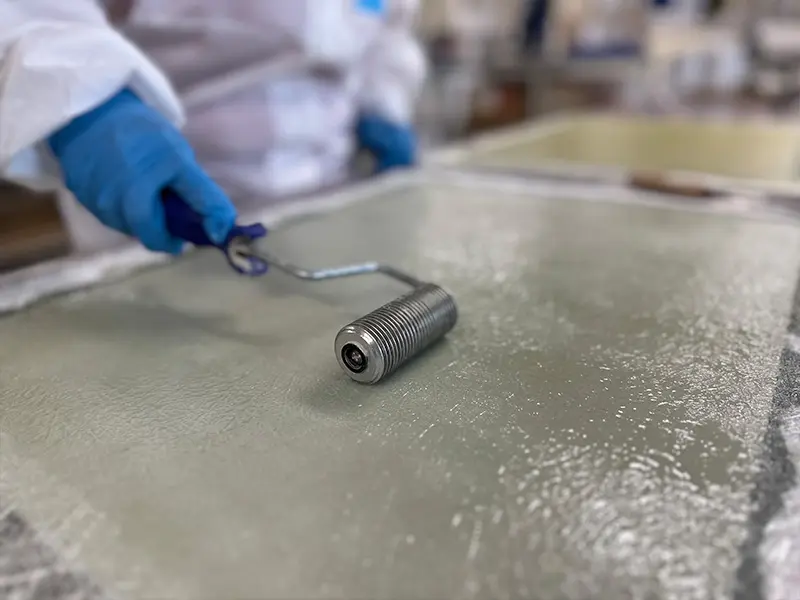
Hand Lay UpAn open-mould manufacturing process where reinforcement fabrics are placed by hand into a mould and resin is applied manually using brushes or rollers.
L
-
LaminateA composite structure made of multiple layers of reinforcement material bonded together with resin. Each layer may have different fibre orientations to achieve desired mechanical properties.
-
Lay UpThe process of placing reinforcement materials into or onto a mould in the required sequence and orientation prior to resin application and curing.
M
-
Machine ToolEquipment used for precision machining, cutting, drilling or trimming of composite parts after moulding and curing.
-
MatrixThe resin component of a composite material that binds the reinforcement fibres together, transfers loads between fibres and protects them from environmental damage.
-
MouldA shaped tool or form used to give the desired geometry to a composite part during the manufacturing process.
P
-
Phenolic ResinA thermosetting resin with excellent fire, smoke and toxicity properties. Widely used in transportation and building applications where fire performance is critical.
-
PigmentA colouring material added to resin or gelcoat to achieve a desired colour in the finished composite product.
-
Polyester ResinThe most commonly used thermosetting resin in the composites industry. Offers good mechanical properties, corrosion resistance and ease of processing at an economical cost.
-
PorosityThe presence of voids or air pockets within a cured composite laminate. Excessive porosity can reduce mechanical properties and is minimised through proper processing techniques.
-
Print-throughA surface defect where the pattern of the underlying reinforcement fabric becomes visible on the finished surface of a composite part.
-
PultrusionA continuous manufacturing process where reinforcement fibres are pulled through a resin bath and then through a heated die to produce constant cross-section profiles.
R
-
ResinA polymer material in liquid or semi-liquid form that, when cured, forms the matrix of a composite material. Common types include polyester, vinylester, epoxy and phenolic resins.
-
RTMResin Transfer Moulding. A closed-mould process where dry reinforcement is placed in a mould cavity and resin is injected under pressure to impregnate the fibres.
S
-
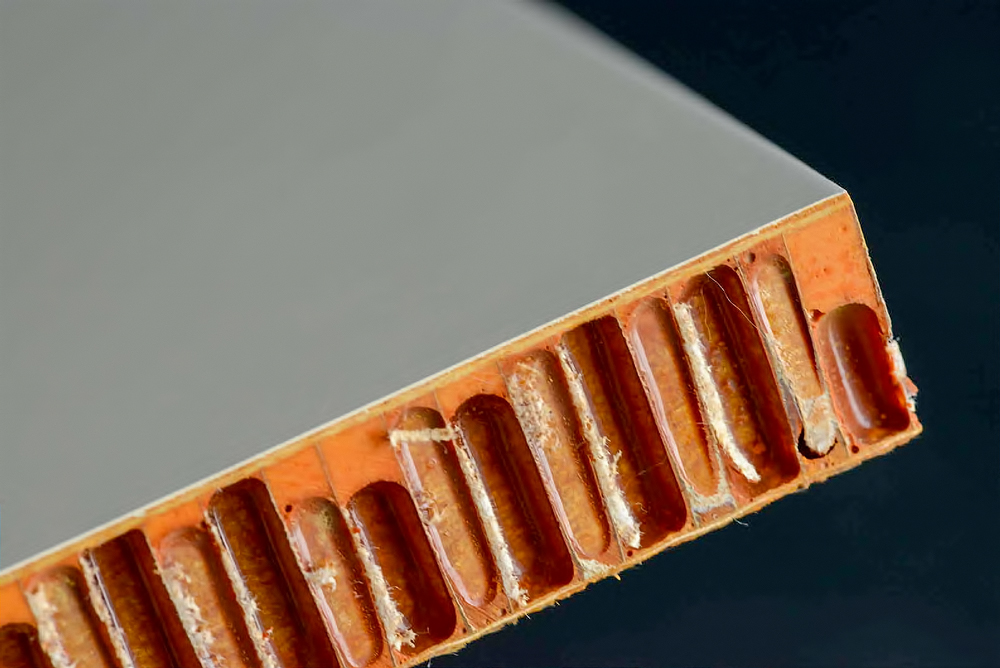
SandwichA structural composite consisting of two thin, strong face sheets bonded to a thicker, lightweight core material. Provides exceptional stiffness and strength at minimal weight.
-
SkinThe outer face sheet of a sandwich composite structure. Also referred to as the face sheet or laminate layer.
T
-
Tensile StrengthThe maximum tensile stress a material can withstand before failure. A key mechanical property for structural composite applications.
-
Thermal Coefficient of ExpansionThe rate at which a material expands or contracts with changes in temperature. Composites can be engineered to have very low thermal expansion coefficients.
-
ThermoplasticA polymer that softens when heated and hardens when cooled. Unlike thermosets, thermoplastics can be repeatedly remelted and reformed.
-
ThermosetA polymer that undergoes an irreversible chemical reaction (curing) to form a rigid, cross-linked structure. Once cured, thermosets cannot be remelted or reformed.
-
ToolThe mould or form used to manufacture a composite part. Tools can be made from various materials including composites, metals and wood.
U
-
UnidirectionalA reinforcement arrangement where all fibres are oriented in a single direction, providing maximum strength along that axis.